Posts

Showing posts with the label Enviroexperts

Regulatory Update: EPA increases civil penalties

 The US EPA has increased its maximum civil penalties with publishing the Final Rule on December 23, 2020. Below is a table showing the increases (Note: Penalties are assessed on a per day, per infraction basis). Program Previous Current Resource Conservation and Recovery Act ( RCRA ) $75,867 $76,764 Clean Air Act ( CAA ) $101,439 $102,638 Clean Water Act ( CWA ) $55,800 $56,460 Comprehensive Env. Response... Act ( CERCLA ) $58,328 $59,017 Emergency Planning/ Right-to-Know Act ( EPCRA ) $58,328 $59,017 Fed Insecticide, Fungicide/Rodenticide Act ( FIFRA ) $20,288 $20,528 Safe Drinking Water Act ( SDWA ) $58,328 $59,017 Toxic Substances Control Act ( TSCA ) $40,576 $41,056 The above table d...

Re-opening during COVID-19

Image
Credit: Simon Davis/DFID COVID-19 hasn't just caused a temporary interruption to our everyday lives, it has upended life as we know it and pushed us into a new reality where face coverings and social distancing is becoming the new normal. As we slowly and cautiously move forward with safely reopening, we ask that you closely follow your state or county Reopening guide along with the guidelines provided by OSHA and the CDC. Please see below for information and resources: CDC Business guidance CDC Resuming business toolkit NIH returning to work training tool For additional information and resources on how to cautiously and safely reopen, call your local Enviroexperts at 301-309-0475.

Sustainable Solutions: COVID-19 cleaning & decontamination

Image
WHAT WE KNOW: Coronavirus Disease 2019 (COVID-19) is a disease caused by a respiratory virus and it has not caused illness in humans before. Symptoms include: fever, dry cough, and shortness of breath. This virus is easily communicable and spreads in a similar manner to the cold or flu – respiratory droplets, contaminated surfaces, and close contact. This virus is affecting all of us and EMSI is committed to help keep your facility and personnel safe. Our Enviroexperts are trained and prepared to safely clean and decontaminate your potentially infected area, facility or location in accordance with CDC and OSHA requirements and recommendations and EPA regulation. HOW WE CAN HELP: Our Enviroexpert Infectious Response Service includes: Conduct assessment and planning Donning of Proper personal protective equipment (PPE) Use of EPA approved disinfecting agents Cleaning and decontamination according to OSHA biosafety standards, EPA regulation, and CDC recommendation Safe handlin...

Regulatory Update: EPA issues temporary enforcement policy in response to COVID-19 Pandemic

The US Environmental Protection Agency (EPA) has announced a temporary enforcement policy in the wake of the COVID-19 pandemic. Prior to the policy the EPA was inundated with questions about how to handle current situations where COVID-19 imposed restrictions prevented enforcement tasks from being completed. The Agency recognizes that work shortages, travel restrictions, and social distancing caused by the pandemic will have an impact on ability to enforce compliance with federal environmental regulations. In response to these projections the EPA has issued a temporary policy that outlines how they intend to "exercise enforcement discretion" with respect to certain compliance situations. On April 2, 2020 The US EPA sent a letter to members of congress clarifying the temporary enforcement policy. This letter aimed to reassure federal lawmakers and the regulated community that EPA's enforcement activities will remain active and to address concerns caused by the release of...

Tech Corner: New Biohaz Packaging Guidelines

Dear Valued Customer: The spread of the Coronavirus (COVID-19) has all of our attention. Environmental Management Services, Inc. (EMSI) has been monitoring the outbreak of COVID-19 and wanted to let you know that we are doing everything possible to keep you and our employees safe. This is our number one priority. During this time, we are making sure that our employees are using every precaution in maintaining healthy habits; including the use of personal protection equipment (PPE), hand sanitizers between each service and a clean/sanitized vehicle. In addition to these safe practices we have included special handling procedures to ensure the safety of our customers, employees, and the public. As of now, the waste generated from treating a patient with Coronavirus does not require any regulatory special handling. Only as a precaution, we ask that you follow the below procedures when handling the waste generated from the treatment of these patients. Any deviations from this process c...

Sustainable Solutions: CHEMSHARE

Image

Regulatory Update: Aerosol Cans As Universal Waste

Image
The EPA has added aerosol cans that contain hazardous waste to the Universal Waste listing as indicated in their federal register posting on Monday, 12/9/2019. This will become effective February 7, 2020. What this means: Adding aerosol cans to the Universal Waste program offers potential cost savings to generators or a change in generator status (to a less regulated status).   This also means that generators may simplify disposal processes around aerosols from the stringent and sometimes burdensome RCRA requirements. However as is with all new Federal regulations, authorized states may choose to adopt the new rules into their state programs or not. Since Maryland and DC state regulations don’t specifically address aerosol cans, this rule will go into effect in both jurisdictions until such time they would explicitly write rules otherwise. See the Final Rule here or read on for more details.

eManifest fees increase in 2019

The table below lists the user fees for fiscal years 2020 and 2021 (October 1, 2019, through September 30, 2021) for the e-Manifest system. These user fees are set based on the manifest usage and processing costs for each manifest type. EPA encourages the hazardous waste industry to adopt fully electronic manifesting as soon as possible so that industry members can take maximum advantage of the benefits and cost savings of electronic manifesting. However, EPA acknowledges that it will take time for industry to fully transition to electronic manifests. EPA supports wide adoption of electronic manifesting by the regulated community as soon as it’s feasible. Manifest submission type Fee per Manifest Mailed in paper manifest $25.00 Scanned image upload $20.00 Data + image upload $14.00 Electronic manifest (fully electronic & hybrid) $8.00 Who pays user fees? EPA charges user fees to receiving faciliti...

Hazardous Waste Generator Improvement Update

The Hazardous Waste Generator Improvements (HWGI) rule is currently adapted in 23 states in addition to the territories and tribes who automatically implement Federal RCRA regulations.  Other states that have yet to adapt the rule are still in discussions.  Below are updates from the mid-atlantic area: Maryland is in the final stages of drafting its proposal to integrate the major changes made by HWGI into COMAR 26.13.03 by January 2020.  The MDE is currently developing 14 regulatory changes affected by HWGI listed below: Program Regulation Title Purpose Oil Control Program UST Regulations Chapters revised to comply with current federal UST regulations, to remove obsolete language, and update current practices. Solid Waste Program Solid Waste Management A review of the regulations pursuant to State Government Article, §§10-130-10-139 revealed the need to update these regulations due ...

Trace or Bulk Chemotherapy Waste - Which one are you generating?

Neither The Environmental Protection Agency (EPA) nor most states specifically define trace chemotherapy (often shortened to “chemo”). EPA has recently recognized trace chemo waste as empty IV bags, tubings, vials, gowns, gloves and other items that are contaminated with residual chemo pharmaceuticals.  To add to the overall confusion, EPA lists only nine chemo agents, but we must consider that the regulations were written years ago and have not been updated since the approval of numerous new drugs now on the market. What is Trace Chemotherapy Waste? All chemo paraphernalia should be managed as trace chemo waste if there is any risk exposure to chemo contamination. Trace chemo waste includes: RCRA empty vials, syringes, IV bags, tubing, gowns, gloves, wipes other paraphernalia associated with routine handling, preparation, and administration of chemo wipes and other materials used during routine cleaning and decontamination of a biological safety cabinet or glove box ...

EPA's eManifest System Information Update

Image
June 20, 2018 eManifest System Information Update One big question our hazardous waste generators are asking is, how does eManifest affect me and what, if anything, should I do when it launches? Here are some key points our valued customers should keep in mind during this transition. ·      EMSI’s manifest process will not change . We will continue to prepare and print manifests for our clients. Our clients will still be required to physically sign (pen to paper) all hazardous waste manifests. ·      EMSI and our partner Treatment Storage Disposal Facilities (TSDF) will continue to use paper manifests during transport and will upload data and pdf scanned copies to the EPA eManifest system. ·      Hazardous waste generators will continue to receive signed and returned manifests from TSDFs after June 30. Two of the biggest benefits to our hazardous waste genera...

Tech Corner: Know your hazardous waste accumulation & storage rules

Image
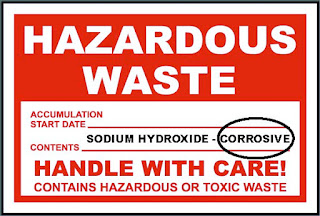
One notable change triggered by the Hazardous Waste Generator Improvement rule is the marking and label requirements on hazardous waste accumulation containers while in satellite waste accumulation and in central waste storage.   Previous RCRA labeling regulations did not require generators to identify and indicate the specific hazards of the hazardous waste accumulated in containers, tanks, drip pads and containment buildings.   This resulted in a failure to communicate risks associated with wastes being accumulated or stored in different locations. Another risk associated with marking and labels was the Treatment Storage Disposal Facility (TSDF) not knowing how to treat the waste to meet land disposal restriction requirements because generators did not always identify the specific RCRA waste codes associated with the waste. To avoid these risks the following changes to hazardous waste management regulations have been applied: 1.        S...