Posts

Showing posts with the label EPA

Tech Corner: Solvent-contaminated rags WYTNK

Image
  In July 2013 the US Environmental Protection Agency (EPA) published a final rule that modified the federal hazardous waste regulations around solvent-contaminated rags and wipes. The rule revised the definition of solid waste to conditionally exclude solvent-contaminated wipes that are cleaned and reused and revises the definition of hazardous waste to conditionally exclude disposable solvent-contaminated wipes. We’re here to share with you “What You Need To Know”. Solvent-Contaminated Wipes Final Rule adoption by state According to Maryland Department of Environment (MDE), the regulation is less-stringent with respect to disposal of solvent-contaminated rags & wipes and the provisions are not currently effective in Maryland. Meanwhile, the regulation is more-stringent with regards to laundering and reusing solvent-contaminated rags & wipes and MDE has changed its previous policy in order to maintain consistency with the basic element of these provisions of the federa...

Regulatory Update: EPA increases civil penalties

 The US EPA has increased its maximum civil penalties with publishing the Final Rule on December 23, 2020. Below is a table showing the increases (Note: Penalties are assessed on a per day, per infraction basis). Program Previous Current Resource Conservation and Recovery Act ( RCRA ) $75,867 $76,764 Clean Air Act ( CAA ) $101,439 $102,638 Clean Water Act ( CWA ) $55,800 $56,460 Comprehensive Env. Response... Act ( CERCLA ) $58,328 $59,017 Emergency Planning/ Right-to-Know Act ( EPCRA ) $58,328 $59,017 Fed Insecticide, Fungicide/Rodenticide Act ( FIFRA ) $20,288 $20,528 Safe Drinking Water Act ( SDWA ) $58,328 $59,017 Toxic Substances Control Act ( TSCA ) $40,576 $41,056 The above table d...

Regulatory Update: EPA issues temporary enforcement policy in response to COVID-19 Pandemic

The US Environmental Protection Agency (EPA) has announced a temporary enforcement policy in the wake of the COVID-19 pandemic. Prior to the policy the EPA was inundated with questions about how to handle current situations where COVID-19 imposed restrictions prevented enforcement tasks from being completed. The Agency recognizes that work shortages, travel restrictions, and social distancing caused by the pandemic will have an impact on ability to enforce compliance with federal environmental regulations. In response to these projections the EPA has issued a temporary policy that outlines how they intend to "exercise enforcement discretion" with respect to certain compliance situations. On April 2, 2020 The US EPA sent a letter to members of congress clarifying the temporary enforcement policy. This letter aimed to reassure federal lawmakers and the regulated community that EPA's enforcement activities will remain active and to address concerns caused by the release of...

eManifest fees increase in 2019

The table below lists the user fees for fiscal years 2020 and 2021 (October 1, 2019, through September 30, 2021) for the e-Manifest system. These user fees are set based on the manifest usage and processing costs for each manifest type. EPA encourages the hazardous waste industry to adopt fully electronic manifesting as soon as possible so that industry members can take maximum advantage of the benefits and cost savings of electronic manifesting. However, EPA acknowledges that it will take time for industry to fully transition to electronic manifests. EPA supports wide adoption of electronic manifesting by the regulated community as soon as it’s feasible. Manifest submission type Fee per Manifest Mailed in paper manifest $25.00 Scanned image upload $20.00 Data + image upload $14.00 Electronic manifest (fully electronic & hybrid) $8.00 Who pays user fees? EPA charges user fees to receiving faciliti...

Trace or Bulk Chemotherapy Waste - Which one are you generating?

Neither The Environmental Protection Agency (EPA) nor most states specifically define trace chemotherapy (often shortened to “chemo”). EPA has recently recognized trace chemo waste as empty IV bags, tubings, vials, gowns, gloves and other items that are contaminated with residual chemo pharmaceuticals.  To add to the overall confusion, EPA lists only nine chemo agents, but we must consider that the regulations were written years ago and have not been updated since the approval of numerous new drugs now on the market. What is Trace Chemotherapy Waste? All chemo paraphernalia should be managed as trace chemo waste if there is any risk exposure to chemo contamination. Trace chemo waste includes: RCRA empty vials, syringes, IV bags, tubing, gowns, gloves, wipes other paraphernalia associated with routine handling, preparation, and administration of chemo wipes and other materials used during routine cleaning and decontamination of a biological safety cabinet or glove box ...

Sustainable Solutions: Enviroexpert Integrated Waste Solutions

Effectively developing, implementing and managing an integrated waste solution requires a very specific set of expertise, resources and planning.   We’re here to ensure your organization has the solutions and services you need to implement a scalable program that handles all you waste streams at all your locations. As your single source partner with our Enviroexpert Integrated Waste Solutions, we offer: ·          Assess and evaluate your companywide waste management and disposal programs for all waste including but not limited to hazardous waste, non-hazardous waste, pharmaceutical waste, regulated medical waste, universal waste, recycling materials, and secure and confidential documents for shredding.  We also assess points of generation and equipment efficiency with focus on evaluating collective effectiveness and identifying needs and conditions for success. ·          Design, Deve...

Tech Corner: Elementary Neutralization Units: Benefits and Requirements

While the EPA normally prohibits hazardous waste treatment without a permit, in Maryland one rare exception can be found.   Using an ENU under certain conditions and meeting certain requirements in Maryland help some generators of hazardous waste lower disposal cost and sometimes even generator status designation. An Elementary neutralization unit is defined as a device which is used for neutralizing wastes which are hazardous only because they exhibit the corrosivity characteristic and is a tank, tank system, container, transport vehicle, or vessel.   In order to reap the extended benefits of using this equipment you must meet the following requirements: 1.        The waste must only be corrosive characteristic (D002).   If the waste is hazardous for any other reason (ie. Toxic in addition to corrosive), the benefits cannot be applied. 2.        The waste must be treated in an ENU immediately upon gene...

Regulatory Update: Toxic Release Inventory Report deadline

Are you on track to complete your TRI report on time? What are TRI toxic chemicals? Every year on July 1, Toxic Release Inventory (TRI) Reports are due as required by EPCRA Section 313.   Section 313 contains a list of specific chemicals and chemical categories and requires facilities to file a TRI report annually for each “Section 313” chemical exceeding an activity threshold. Who needs to report?   If you meet all three of these criteria you are required to report: 1.        10 or more full-time employees or the equivalent 2.        Are in a TRI-covered industry sector (ie. NAICS codes are listed) 3.        At least one TRI-listed chemical meets minimum threshold during the calendar year Is this the same as Tier II? Although both are mandated regulatory reports and deal with chemical inventory, there are basic differences that make them distinct from one another...

Sustainable Solutions: Amendment to Management of Pharmaceuticals

On 2/22/19, EPA has published the final rule: Management Standards for Hazardous Waste Pharmaceuticals and Amendment to the P075 Listing for Nicotine . This rule was initially proposed in 2015 and is scheduled to go into effect August 21, 2019. Goals for this rule include EPA’s efforts to establish cost-savings and streamlined standards for hazardous waste pharmaceutical (HWP) management in order to accommodate healthcare operations and maintain human health and environmental protection.  The rule also eliminates intentional sewer disposal or discharge of hazardous waste pharmaceuticals, reduces overlapping regulations (DEA, FDA, etc.), provides regulatory clarity and consistency on how RCRA applies to reverse distribution and reverse logistics, and allows pharmaceutical distributors, healthcare facilities, and other site that manage these wastes to exclude HWP from RCRA regulation standards.  This also excludes some FDA nicotine therapy products from regulation. Belo...

EPA's eManifest System Information Update

Image
June 20, 2018 eManifest System Information Update One big question our hazardous waste generators are asking is, how does eManifest affect me and what, if anything, should I do when it launches? Here are some key points our valued customers should keep in mind during this transition. ·      EMSI’s manifest process will not change . We will continue to prepare and print manifests for our clients. Our clients will still be required to physically sign (pen to paper) all hazardous waste manifests. ·      EMSI and our partner Treatment Storage Disposal Facilities (TSDF) will continue to use paper manifests during transport and will upload data and pdf scanned copies to the EPA eManifest system. ·      Hazardous waste generators will continue to receive signed and returned manifests from TSDFs after June 30. Two of the biggest benefits to our hazardous waste genera...

Tech Corner: Know your hazardous waste accumulation & storage rules

Image
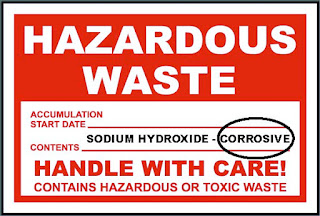
One notable change triggered by the Hazardous Waste Generator Improvement rule is the marking and label requirements on hazardous waste accumulation containers while in satellite waste accumulation and in central waste storage.   Previous RCRA labeling regulations did not require generators to identify and indicate the specific hazards of the hazardous waste accumulated in containers, tanks, drip pads and containment buildings.   This resulted in a failure to communicate risks associated with wastes being accumulated or stored in different locations. Another risk associated with marking and labels was the Treatment Storage Disposal Facility (TSDF) not knowing how to treat the waste to meet land disposal restriction requirements because generators did not always identify the specific RCRA waste codes associated with the waste. To avoid these risks the following changes to hazardous waste management regulations have been applied: 1.        S...

Regulatory Update: EPA’s E-Manifest system launch June 30, 2018

Image
EPA’s Electronic Manifest System known as “eManifest” is scheduled to launch on June 30, 2018.   This system has been established according to the Hazardous Waste Electronic Manifest Establishment Act put into law on October 5, 2012.   The system’s goal is to modernize our nations “cradle-to-grave” hazardous waste tracking process.   Here are some important points to consider during this transition. The new eManifest system offers a centralized single platform hosted by the EPA designed to streamline tracking of all hazardous waste shipped after June 30.   TSDFs will be required to submit manifest data to the EPA for the shipments they receive.   This data will then be made available to all local, state, and federal agencies of interest and, after some time, also publically accessible for research and study purposes. Once rolled out, eManifest will automate much of the hazardous waste tracking process.   However, some other regulatory agencies that ...

Sustainable Solutions at Your Disposal: WasteWise is Worth Your While

Image
If you want to do more to reduce and recycle your company’s waste products, consider joining the more than 2000 other environmentally-conscious organizations and participate in the EPA’s voluntary WasteWise program. WasteWise has been around over 20 years and its partners have reported reducing more than 120 million tons of waste. ​ Companies of all sizes and from all industries are welcome join. As long as you can measure and report your company’s waste output, you’re eligible to participate. And not only will your efforts as a WasteWise partner help the environment, but they can also help your bottom line. One of the member benefits includes reduced purchasing and waste disposal costs. So, if you’re interested in joining or learning more, contact your dedicated Enviroexpert or visit the EPA’s WasteWise website .

Regulatory Updates: Hazardous Waste Generator Improvements Rule

In November 2016, the above mentioned rule was finalized, which marked a historic update to the Federal RCRA regulations as it pertains to hazardous waste generators.  The major changes in the rule went effective May 30, 2017.  Authorized states will have to adopt the more stringent regulations typically by July 1, 2018 (July 1, 2019 if state law change is required).  If you aren’t already, you need to ask yourself immediately, when and how are we affected?  The following are the noteworthy changes and states affected in the region: All regions An overall re-org and re-structuring of 40 CFR 262 to streamline navigation and understanding. For example previously known conditionally exempt small quantity generators (CESQGs) are now known as very small quantity generators (VSQGs). Updated retention policies for waste determination records. More stringent regulations An expansion of the marking and labeling requirements for hazardous waste containers in ...